


Choosing the right disability support provider plays a crucial role in improving independence, wellbeing, and quality of life for individuals living with an impairment. While large providers offer broad services, local disability services often deliver more personalised, responsive, and community-focused care. This local approach ensures participants receive support that truly reflects their environment, needs, and long-term goals.
Stronger Community Connection and Personalised Care
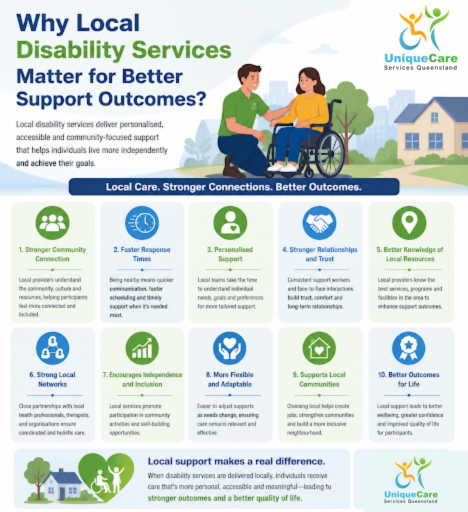
One of the biggest advantages of local disability services is the ability to build strong relationships within the community. Local providers understand the specific needs, culture, and available resources in their area, which helps deliver more tailored support.
For example, an NDIS provider in Lawnton is more likely to understand nearby healthcare facilities, transport systems, and community programs. This allows participants to access services more efficiently and feel more connected to their surroundings, improving overall independence and confidence.
Faster Response Times and Better Accessibility
Local providers are often more accessible, meaning participants can receive quicker responses and more flexible support arrangements. This is especially important for individuals who require urgent assistance or frequent care adjustments.
With nearby teams available, scheduling becomes easier, and changes to care plans can be implemented without long delays. This responsiveness contributes to more stable and reliable support outcomes, reducing stress for both participants and their families.
Tailored Support That Reflects Local Needs
Every community has unique challenges and opportunities, and local disability services are better positioned to address them effectively. Providers operating within a specific region understand local infrastructure, employment opportunities, and social inclusion programs.
For instance, disability services in Sunshine Coast are designed to support individuals within that region’s lifestyle and community structure. This ensures participants are not only receiving care but also actively engaging in meaningful local activities that enhance social participation.
Better Coordination with Local Health and Support Networks
Local disability providers often work closely with nearby healthcare professionals, therapists, schools, and community organisations. This collaboration ensures a more coordinated approach to care, reducing gaps in communication and improving service consistency. When support teams are geographically close, it becomes easier to align services, share updates, and ensure that participants receive holistic care tailored to their needs.
Building Trust Through Consistent Relationships
Trust is a key factor in disability support, and local services make it easier to build long-term, consistent relationships. Participants are more likely to see familiar support workers, which helps create a sense of comfort, safety, and stability. This continuity improves communication, encourages independence, and enhances the overall effectiveness of care plans.
Local disability services in Sunshine Coast play a vital role in delivering high-quality, personalised, and accessible support. From stronger community connections to faster response times and better coordination, choosing a local provider can significantly improve outcomes for individuals and their families. By prioritising local expertise, participants receive more meaningful and effective care tailored to their environment and lifestyle.
Make An Appointment Today
For trusted, person-centred support, contact Unique Care Services QLD today and experience the difference local disability services can make in building independence and improving quality of life.
Call us at 0734873241 or email us at info@ucsq.com.au for more information.
- What are local disability services?
Local disability services are support providers based within a specific community or region, offering personalised care and assistance close to where participants live.
- Why are local disability services better than larger providers?
They often provide more personalised support, faster communication, and stronger community connections compared to larger, centralised organisations.
- How do local disability services improve support outcomes?
They improve outcomes by offering tailored care, consistent support workers, and better understanding of local resources and environments.
- Do local providers understand NDIS requirements well?
Yes, many local providers are experienced NDIS partners and understand how to align supports with individual plans effectively.
- How do local disability services support independence?
They encourage participation in community activities, skill-building programs, and everyday life tasks that promote independence.
- Are local disability services more flexible?
Yes, they often offer more flexible scheduling and quicker adjustments to care plans based on participant needs.
- How do local services improve communication?
Being nearby allows for faster response times, easier face-to-face meetings, and stronger relationships between participants and support teams.
- Can local disability services connect participants with community programs?
Yes, they usually have strong knowledge of local events, support groups, and services that encourage social inclusion.
- Do local disability services work with healthcare providers?
Most local providers collaborate closely with local doctors, therapists, and allied health professionals for coordinated care.
- Why does location matter in disability support?
Location matters because it impacts accessibility, response time, familiarity with community resources, and overall quality of personalised support.

