



For many people living with mobility issues, achieving greater independence and participating in everyday activities can require the right support and guidance. An Occupational Therapy Assessment plays an important role in understanding an individual’s abilities, challenges, and support requirements. For NDIS participants, these assessments provide valuable insights that help create personalised plans focused on improving quality of life, safety, and independence.
Occupational therapists evaluate how a person manages daily activities, including personal care, mobility, communication, home tasks, and community participation. The information gathered can help NDIS participants access suitable supports and services that align with their goals.
Understanding Individual Needs and Functional Abilities
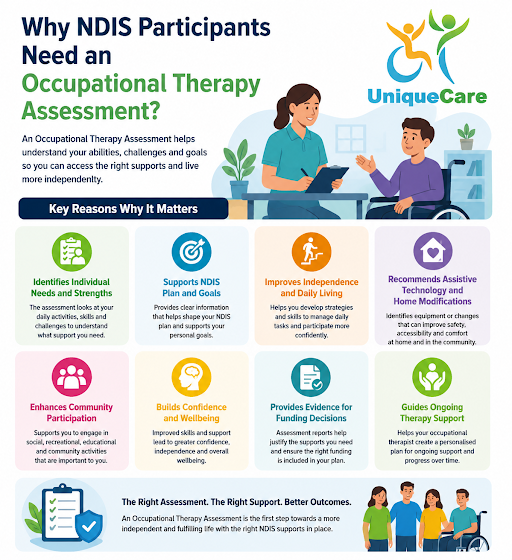
Every NDIS participant has unique needs, abilities, and goals. An occupational therapy assessment helps identify strengths as well as areas where additional assistance may be required. Occupational therapists assess a person’s functional capacity and provide recommendations that support greater independence.
Through a professional occupational therapy assessment in Brisbane, participants can receive a detailed understanding of their abilities and challenges. These assessments help determine appropriate strategies, equipment, and support options that improve daily living outcomes.
Supporting NDIS Planning and Funding Decisions
Occupational therapy assessments are valuable tools during the NDIS planning process. A detailed assessment report can provide evidence about a participant’s support needs and explain how specific services may assist them in achieving their goals.
The recommendations provided by an occupational therapist can help participants and their support networks make informed decisions about necessary supports. This may include recommendations for assistive technology, home modifications, skill development, or ongoing therapy services.
Improving Independence and Everyday Participation
One of the main goals of occupational therapy is helping individuals participate more confidently in everyday activities. Occupational therapists develop personalised strategies that support skills such as self-care, household tasks, social participation, and community involvement.
Accessing professional occupational therapy support services in Brisbane allows NDIS participants to receive ongoing guidance tailored to their individual requirements. These services focus on empowering individuals to build confidence, increase independence, and engage more actively in their daily lives.
Identifying Assistive Technology and Environmental Support
An occupational therapy assessment can also identify whether a participant may benefit from assistive equipment or changes to their environment. Recommendations may include mobility aids, communication tools, or home modifications designed to create a safer and more accessible living space.
By understanding a participant’s environment and challenges, occupational therapists can suggest practical solutions that improve comfort, safety, and independence.
An Occupational Therapy Assessment is an essential step for many NDIS participants who want to access the right support and achieve their personal goals. By identifying individual needs, improving daily skills, and providing professional recommendations, occupational therapy helps participants live more independently and confidently.
Make An Appointment Today
If you are looking for personalised occupational therapy guidance and support, contactUnique Care Services QLD today to learn how our team can help you access the right services and achieve greater independence through tailored NDIS support.
Call us at 1800 289 244 or email us at uniquecareservicesqld.au@gmail.com for more information.
- What is an Occupational Therapy Assessment for NDIS participants?
An Occupational Therapy Assessment is a professional evaluation that helps understand an NDIS participant’s abilities, challenges, and support requirements. An occupational therapist assesses how a person manages daily activities, mobility, communication, self-care, and community participation to recommend suitable supports.
- Why is an Occupational Therapy Assessment important for NDIS planning?
An Occupational Therapy Assessment provides detailed information about a participant’s functional abilities and support needs. The assessment report can help NDIS participants, families, and support coordinators make informed decisions when developing personalised NDIS plans and requesting appropriate funding.
- What does an occupational therapist assess during the evaluation?
An occupational therapist may assess areas such as personal care, household tasks, mobility, sensory needs, communication, social participation, safety, and independence skills. The assessment helps identify barriers and recommends strategies to improve everyday living.
- How can an Occupational Therapy Assessment help improve independence?
An Occupational Therapy Assessment identifies areas where a participant may need support and provides strategies to develop greater independence. Recommendations may include skill-building activities, assistive equipment, environmental changes, or ongoing therapy support.
- Do all NDIS participants need an Occupational Therapy Assessment?
Not every NDIS participant requires an Occupational Therapy Assessment, but it can be highly beneficial for individuals who need support with daily activities, functional challenges, assistive technology, home modifications, or achieving greater independence.
- How does an Occupational Therapy Assessment support access to assistive technology?
Occupational therapists can evaluate a participant’s needs and recommend suitable assistive technology, such as mobility aids, communication devices, or specialised equipment. These recommendations help ensure participants receive solutions that improve safety and independence.
- What happens after completing an Occupational Therapy Assessment?
After the assessment, the occupational therapist prepares a report outlining the participant’s abilities, challenges, goals, and recommended supports. The report can be used to guide NDIS planning and help coordinate appropriate services.
- Can an Occupational Therapy Assessment help with home modifications?
Yes. Occupational therapists can assess a participant’s home environment and identify changes that may improve accessibility and safety. Recommendations may include bathroom modifications, mobility solutions, or adjustments to make daily tasks easier.
- How do occupational therapy services support NDIS participants in daily life?
Occupational therapy services help participants develop skills, overcome challenges, and participate more confidently in everyday activities. Support may focus on improving independence, social participation, self-care abilities, and overall quality of life.
- How can NDIS participants access an Occupational Therapy Assessment?
NDIS participants can access an Occupational Therapy Assessment through their NDIS plan, support coordinator, or a registered occupational therapy provider. A qualified occupational therapist can help identify individual needs and recommend suitable support options.

