


Choosing the right support option for a person with impairment is a significant decision that can impact independence, safety, and quality of life. Supported Independent Living (SIL) is one of the most widely used NDIS-funded supports in Australia, designed to help individuals live as independently as possible while receiving daily assistance. However, understanding whether SIL is the right fit depends on individual needs, goals, and level of support required.
What is Supported Independent Living?
Supported Independent Living in Brisbane provides assistance with daily tasks such as cooking, cleaning, personal care, and medication management. It is typically delivered in shared living arrangements or individual accommodation where support staff are available either 24/7 or at scheduled times, depending on the participant’s needs.
The goal of SIL is not just care, but empowerment—helping individuals build life skills and confidence while maintaining independence in a safe environment.
Who Might Benefit from SIL?
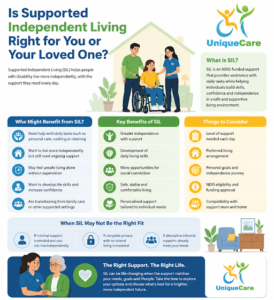
Supported Independent Living may be suitable for individuals who:
- Require regular or daily assistance with personal care or household tasks
- Want to live independently but still need ongoing support
- May feel unsafe living alone without supervision
- Need help developing life skills such as budgeting, cooking, or social interaction
- Are transitioning from family care or hospital-based support
NDIS SIL services in Inala are especially beneficial for people who want a balance between independence and structured support.
Key Factors to Consider Before Choosing SIL
Level of Support Needed
The first step is understanding how much assistance is required. Some individuals may only need occasional help, while others require 24-hour support.
Living Environment Preferences
Supported Independent Living in Inala can be delivered in shared homes or individual units. Comfort with shared living arrangements is an important factor in decision-making.
Personal Goals and Independence
It’s important to consider whether the individual wants to build independence skills or prefers a more supportive environment.
NDIS Funding Eligibility
SIL is funded under the NDIS, so eligibility and approval through assessments play a key role in accessing this support.
Benefits of Supported Independent Living
SIL offers several advantages, including:
- Increased independence with structured support
- Improved daily living skills
- Greater social participation and community engagement
- Access to trained support workers
- A safe and stable living environment
These benefits can significantly enhance quality of life when the support is well-matched to individual needs.
When SIL May Not Be the Right Fit
SIL may not be suitable for individuals who:
- Require minimal support and can live independently without assistance
- Prefer complete privacy with no shared living arrangements
- Have alternative informal support systems that meet their needs
In such cases, other NDIS supports or independent living arrangements may be more appropriate.
Supported Independent Living can be a life-changing option for individuals who need structured support while striving for independence. However, the decision should be based on personal needs, lifestyle preferences, and long-term goals. A proper assessment and consultation with professionals can help determine the most suitable pathway.
Book An Appointment Today
For expert guidance and personalised SIL support solutions, contact Unique Care Services QLD today and take the next step toward a more independent and fulfilling lifestyle. Call us at 1800 289 244 or email us at info@ucsq.com.au for more information.
- What is Supported Independent Living (SIL)?
Supported Independent Living is an NDIS-funded support that helps people with disability live as independently as possible while receiving assistance with daily tasks.
- Who is SIL designed for?
SIL is designed for individuals who need regular help with personal care, household tasks, or supervision while living in a shared or individual home.
- How do I know if SIL is the right option?
It may be suitable if the person requires ongoing daily support and wants to build independence while still having access to trained support workers.
- Does SIL mean living in a group home?
Not always. SIL can be delivered in shared homes or individual accommodation depending on funding and personal needs.
- What level of support is provided in SIL?
Support can range from a few hours a day to 24/7 assistance, depending on individual requirements and NDIS approval.
- Can SIL improve independence?
Yes. SIL focuses on developing life skills such as cooking, cleaning, budgeting, and social participation.
- Is SIL suitable for people who can live alone?
If a person can manage most tasks independently, SIL may not be necessary. Lower support options may be more appropriate.
- How is SIL funding approved?
SIL funding is assessed by the NDIS based on functional needs, living situation, and long-term support requirements.
- Can SIL arrangements be changed later?
Yes. SIL support levels and living arrangements can be reviewed and adjusted as needs change over time.
- What should families consider before choosing SIL?
Families should consider safety, independence goals, support intensity, living environment preferences, and long-term wellbeing.

