


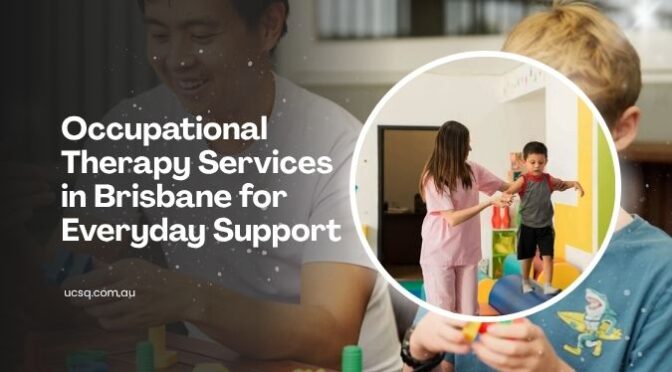
If everyday tasks like dressing, cooking, writing, or returning to work feel harder than they should, professional support can make a real difference. Many families searching for occupational therapy services in Brisbane want practical, evidence-based help that fits real life, not just clinic exercises.
A qualified occupational therapist Brisbane residents trust can assess your needs, set clear goals and teach strategies that improve daily function at home, school and work.
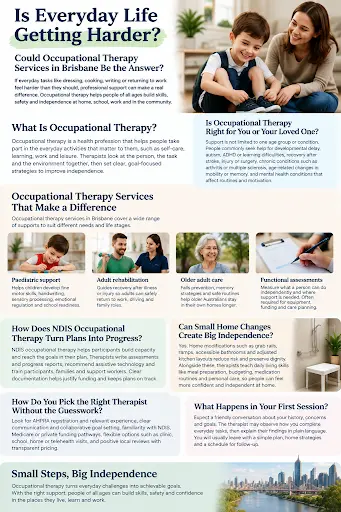
What Is Occupational Therapy, and Why Is Everyone Talking About It?
Occupational therapy is a health profession that helps people take part in the everyday activities that matter to them, such as self-care, learning, work and leisure. Therapists look at the person, the task, and the environment together, then adjust one or all three to improve independence. Sessions are goal-focused, so progress is measurable and meaningful.
Is Occupational Therapy Right for You or Your Loved One?
Support is not limited to one age group or condition. People commonly seek help for:
- Developmental delay, autism, ADHD, or learning difficulties
- Recovery after stroke, injury or surgery
- Chronic conditions such as arthritis or multiple sclerosis
- Age-related decline in mobility, memory or safety
- Mental health conditions that affect routines and motivation
If a health condition or disability makes daily life harder, occupational therapy is worth exploring.
Which Occupational Therapy Services Can Change Everyday Life?
Local occupational therapy Brisbane providers typically offer a broad mix of supports.
- Paediatric support – Paediatric occupational therapy helps children develop fine motor skills, handwriting, emotional regulation, and school readiness. Sensory processing support is also common for children who are overwhelmed by noise, touch or movement. Parents often search for occupational therapy for kids when they notice difficulty with dressing, feeding or focusing in class.
- Adult rehabilitation – After illness or injury, therapists guide rehabilitation so adults can safely return to work, driving and family roles.
- Older adult care – Falls prevention, memory strategies and safe routines help older Australians stay in their own homes longer.
- Functional assessments – Functional assessments measure what a person can do independently and where support is needed. They are often required for equipment, funding and care planning.
How Does NDIS Occupational Therapy Turn Plans Into Progress?
NDIS occupational therapy supports participants to build capacity and reach the goals in their plan. Therapists write assessments and progress reports, recommend assistive technology, and train participants, families and support workers. Clear documentation helps justify funding and keeps plans on track. It is best to choose a provider who understands NDIS pricing, reporting and plan reviews.
Can Small Home Changes Create Big Independence?
Absolutely. Home modifications such as grab rails, ramps, accessible bathrooms and adjusted kitchen layouts reduce risk and preserve dignity. Alongside these, therapists teach daily living skills like meal preparation, budgeting, medication routines and personal care. The goal is confidence, not dependence.
How Do You Pick the Right Therapist Without the Guesswork?
Choosing well saves time and improves outcomes. Look for these signs:
- AHPRA registration and relevant experience
- Clear communication and collaborative goal setting
- Familiarity with NDIS, Medicare or private funding pathways
- Flexible options, including clinic, school, home and telehealth visits
- Positive local reviews and transparent pricing
When comparing an occupational therapist Brisbane families recommend, ask how progress will be tracked and how often goals are reviewed.
Options such as mobile occupational therapy Queensland can also help people who find travel difficult.
Get started for your child or loved one. Call Unique Care Services QLD and let our experienced therapists help you build independence with confidence.
Why Does Choosing a Local Team Make Such a Big Difference?
Local providers understand nearby schools, transport, community programs and housing types, which makes their recommendations more realistic. Whether you need OT services in Brisbane for a child or an aging parent, a nearby team can coordinate with GPs, teachers and support coordinators more easily. When you review occupational therapy services Brisbane providers offer, prioritise those with a strong community presence and a person-centred approach.
What Happens in Your First Session?
Expect a friendly conversation about your history, concerns and goals. The therapist may observe how you complete everyday tasks, then explain findings in plain language. You will usually leave with a simple plan, home strategies, and a schedule for follow-up.
Small Steps, Big Independence: The Bottom Line
Occupational therapy turns everyday challenges into achievable goals. With the right support, people of all ages can build skills, safety and confidence in the places they live, learn and work.
Ask about NDIS support. Contact Unique Care Services QLD to learn how therapy can fit into your plan goals.
- What does an occupational therapist do?
They help people overcome physical, sensory, cognitive or emotional barriers so they can complete daily activities independently.
- Do I need a referral to see an occupational therapist?
Not always. Private sessions usually do not need one, but funding schemes such as Medicare or NDIS may have specific requirements.
- How long does an occupational therapy session last?
Sessions typically run 45 to 60 minutes, depending on the goals and age of the client.
- Can occupational therapy help children with autism?
Yes. Therapy can improve communication, sensory regulation, play skills and independence in routines.
- Is occupational therapy covered by the NDIS?
Yes, when it is linked to your plan goals and included in your funded supports.
- How many sessions will I need?
It depends on your goals. Some people need a short block of sessions, while others benefit from ongoing support.
- Can occupational therapy be provided at home or school?
Yes. Many therapists deliver sessions at home, school, work or through telehealth.
- What is the difference between occupational therapy and physiotherapy?
Physiotherapy mainly targets movement and physical recovery, while occupational therapy focuses on performing everyday tasks and adapting environments.
- Can adults and older people access occupational therapy?
Absolutely. Support includes rehabilitation, falls prevention, equipment advice and home safety assessments.
- How do I prepare for my first appointment?
Bring relevant reports, list your main concerns and think about the goals you want to achieve.
Ready to Take the First Step With Unique Care Services QLD?
Book a consultation today. Speak with the friendly team at Unique Care Services QLD and start your personalised support plan.

